Demand
Firm foreign market
In the first half of 2025 the country exported 202.300 tonnes for USD 1.080,8 million, with Chile, Taiwan, the United States, Israel, Russia and Brazil among the destinations.

Investors
Your capital is not applied to a concept: it is applied to ear-tagged animals, on a specific ranch, within a cycle with a set term. You can count them, see them and request their history whenever you want.
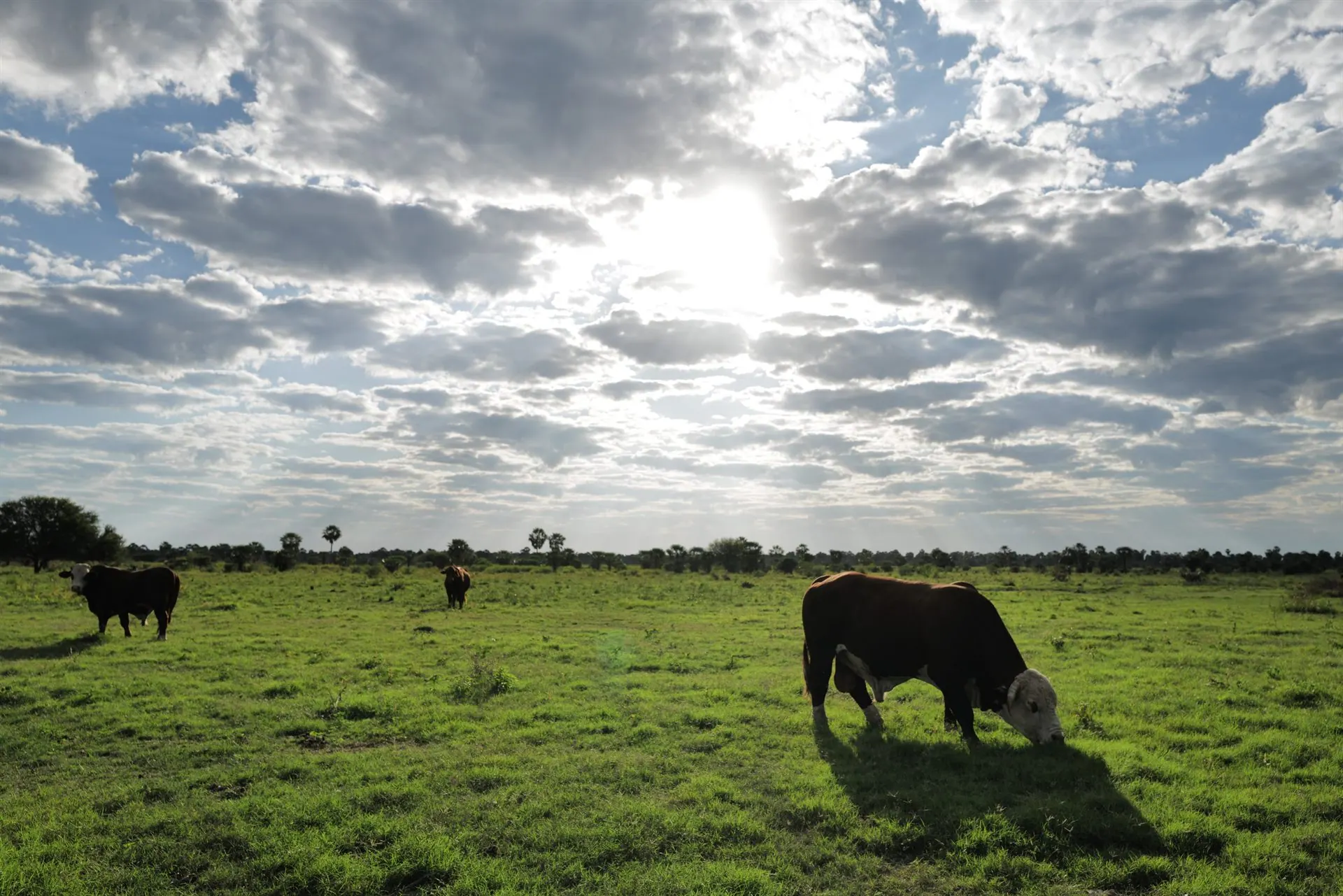
Paraguay is exporting more beef, to more countries and at better prices. At the same time it has fewer animals than five years ago. That imbalance is exactly where a well-managed project wins.
Demand
In the first half of 2025 the country exported 202.300 tonnes for USD 1.080,8 million, with Chile, Taiwan, the United States, Israel, Russia and Brazil among the destinations.
Supply
The national herd fell 9% between 2020 and 2025 and the number of producers dropped 16%. Less supply with more demand sustains the price of cattle.
Rules
Ley 117/1991 grants equal treatment to foreign investors and allows the free remittance of profits. Corporate income tax is 10%.
What backs your capital
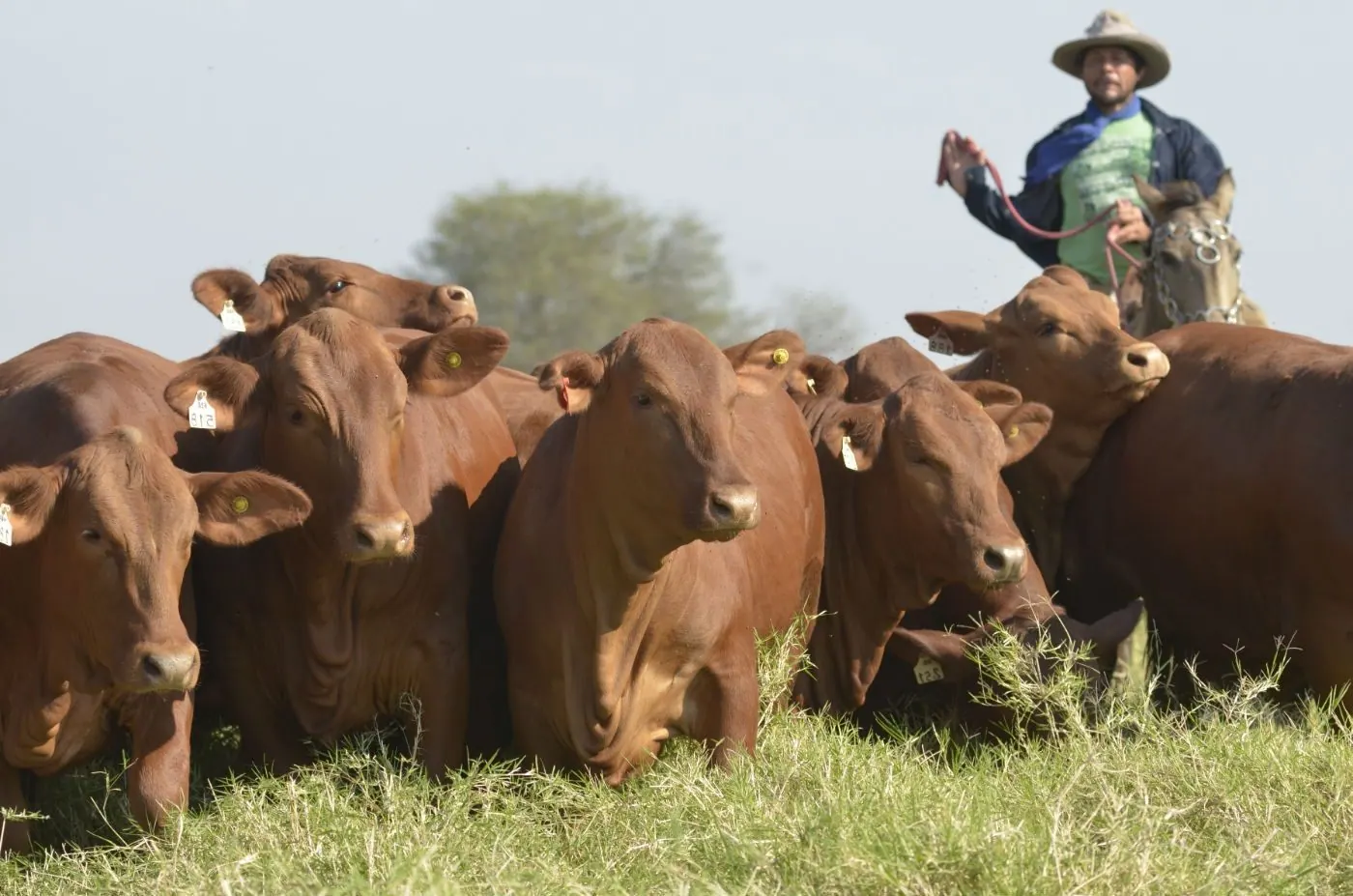
Your contribution is not diluted in a fund or a concept: it is applied to a specific lot, ear-tagged one by one and registered. You receive the list with the identification of every animal that backs your investment.
A pledge in your favor is registered over that lot. You can go to the ranch, see them and count them. If you want to bring your own veterinarian to inspect them, even better: it is your capital.
This is the full journey. No step is skipped, not even when the investor is in a hurry.
We show you the project with its numbers: cattle category, ranch, estimated term, costs, risks and exit conditions. Without guaranteed-return projections.
A contract reviewed by your lawyer and by ours, with the pledge over the animals of the lot duly registered. Only then is the capital transferred.
Purchase of the cattle, ear-tagging and registration. You receive the list of the animals that back your contribution, with their identification.
Management of the lot and a report every 60 to 90 days: weigh-ins, animal health, mortality, pasture condition and exit projection. You can visit the ranch with prior notice.
Sale of the lot, settlement with the supporting documents of the transaction and return of the capital with the result as agreed. The pledge is cancelled.
Trusting us is not enough, and we don't ask you to. This is what you get in writing, registered and in your name, before the first dollar is transferred.
Over the specific lot your contribution buys, a collateral security is registered in your favor, in the corresponding registry. It's not a good-faith clause: it's a right over identified animals.
Every head backing your investment has an ear tag, a registration entry and a history you can request. If you want to go to the ranch and count them yourself, you can.
The draft is delivered before the closing meeting so your lawyer and your accountant can review it, with an eye on Paraguayan law. If you request changes, they are discussed before signing, not after.
Capital moves in and out of the account of the company that manages the cycle, not a personal account. Every movement is documented and available for your accountant.
There is no single term: it depends on the cattle category being purchased and the production objective. This is what defines each type of cycle, in terms of management, not of returns.
6 to 9 months
Recently weaned calves are purchased and sold as rearing steers or heifers, after a period on quality pasture. It is the shortest cycle and the one with the least weather exposure.
Entry ≈180–220 kg · Exit ≈280–320 kg · Target ADG 500–650 g/day
8 to 14 months
Rearing animals are finished to slaughter weight, on improved pasture or with supplementation. The term depends on the entry category and the feeding system chosen.
Entry ≈280–330 kg · Exit ≈450–500 kg · Target ADG 600–800 g/day
24 to 36 months
Includes the reproductive stage: bred females, calving, weaning and sale of the production. It is the longest term, and the one most dependent on the herd's pregnancy and weaning rates.
Pregnancy target ≥85% · Weaning target ≥80%, over bred females
These numbers describe management, not a promised result: they are the starting point for discussing your project, and they vary with the ranch, the category, the weather and the price of cattle on the day of purchase and the day of sale. The term set in your contract is specific to your cycle.
Simulate carrying capacity and stocking rate in the calculator
Every project has its own access to the reporting panel: weighings, animal health, lot movements and pasture condition, updated with every field round. You don't have to wait for the 60-to-90-day report to know how your investment is doing.
And if you'd prefer a view that isn't ours, you can contract an independent external audit of your own cycle: a physical count of the lot, reconciliation of records and verification that the animals exist, are where they were said to be and perform as reported.
We would rather lose an enquiry than win it by promising something cattle ranching cannot guarantee.
We do not publish
The result of a cycle depends on the price of cattle when buying and selling, on the weather and on animal health. We show you the calculation model and the assumptions in the meeting, with their scenarios.
We do not offer
There is collateral over the herd, which is different from guaranteeing the profit. Drought, mortality and falling prices are real risks and they are written into the contract.
We do not do
Our contracts are private agreements between identified parties. Any structure that involves raising capital from the public is channelled through the corresponding regulated vehicles.
See legal structuresWe do not ask
The draft contract is delivered before the closing meeting so that your advisor can review it. If you want changes, they are discussed before signing.
Cattle ranching is agriculture: none of this is eliminated entirely, it is mitigated. This is how we do it.
| Risk | What can happen | How it is mitigated |
|---|---|---|
| Weather | Drought or excess rain lowers weight gain or delays the sale. | Forage reserves, pasture monitoring and stocking-rate adjustment by paddock. |
| Animal health | A disease or outbreak reduces the number of head in the lot. | SENACSA animal health plan up to date, our own chute and a dedicated veterinarian. |
| Market price | The purchase or sale value of the cattle varies with export demand. | The day's price is reported with receipts; no sale price is fixed in advance without market backing. |
| Term | The cycle can run longer than estimated if the ranch does not yield as expected. | Reports every 60 to 90 days flag any deviation early, with an adjustment plan discussed with you. |
These are the questions that come up in almost every first meeting. If yours isn't here, we'll add it as soon as you write to us.
The pledge gives you a real right over the animals in the lot, not a guarantee of profit. If the cycle's result is negative — due to weather, animal health or price — whatever there is gets liquidated, with the supporting documents of the transaction, and we proceed as agreed in the contract. That's why the calculation model is reviewed with its scenarios, including the bad one, before you decide to invest.
Generally not: your contribution is applied to live animals in production, not to a liquid balance. What can be discussed, depending on the contract, is transferring your position to another investor with the agreement of the parties. Ask about it at the initial meeting if it's an important condition for you.
The contract is drawn up in US dollars (USD), the reference currency for Paraguay's export cattle business. The conversion mechanism, if your capital comes from another currency, is agreed with you before signing.
Yes, with prior notice to coordinate logistics. You can go alone or with your own veterinarian. It's your capital: the more you check it, the better for both parties.
It depends on the project and on the cattle category being assembled at that time. It's discussed at the initial meeting, along with the rest of the terms.
The pledge is registered in your favor over identified animals: it's a right that doesn't depend on the company continuing to operate in order to exist. The draft contract, reviewed by your lawyer, explicitly addresses exit and succession scenarios for managing the lot.
Paraguay applies a 10% corporate income tax (IRE), and Ley 117/1991 guarantees the free remittance of profits abroad for the foreign investor. The detail applied to your particular case is reviewed by your tax advisor together with the draft contract.
See the full legal and tax framework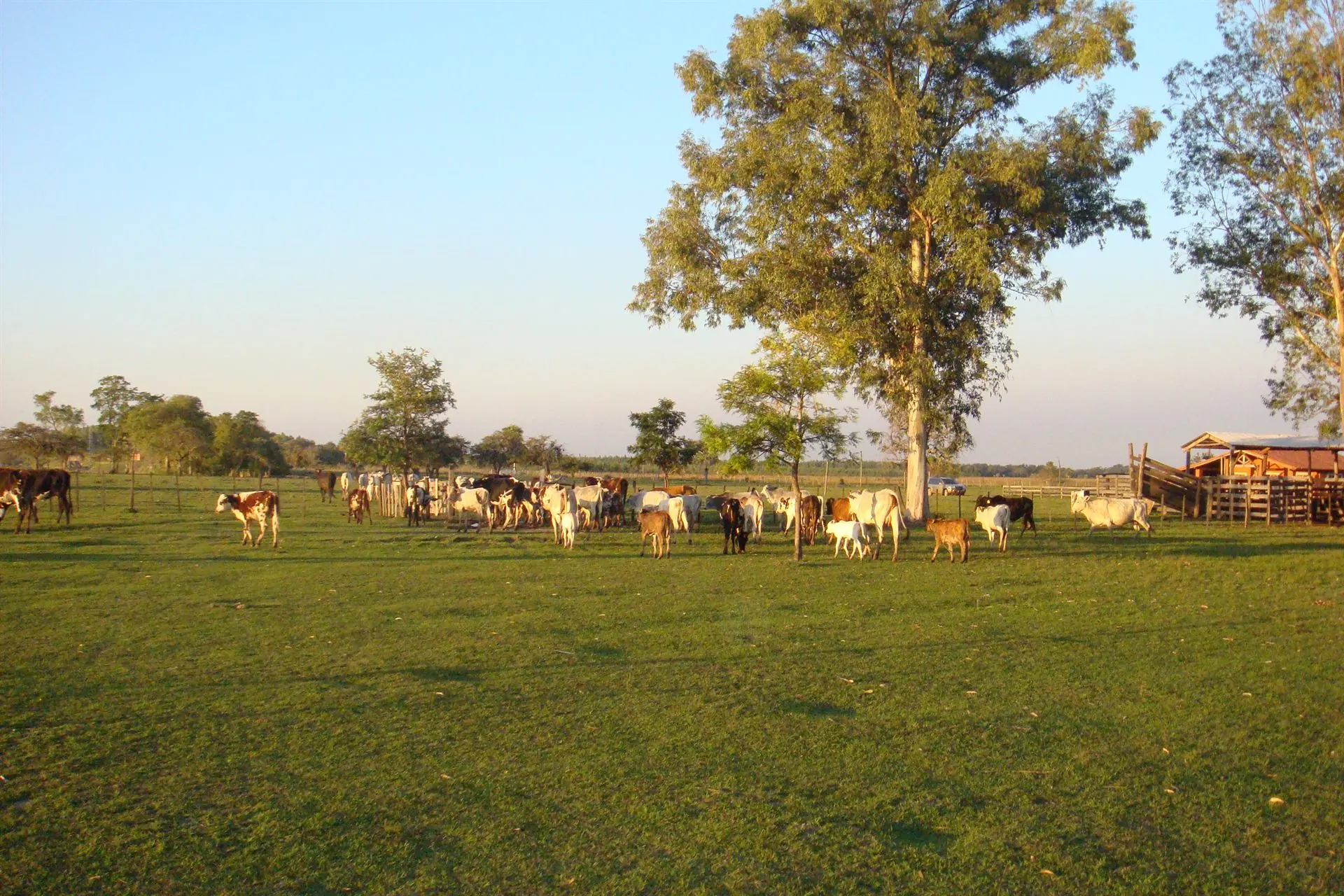
An asset that walks, eats and can be weighed. It can be counted.
Fill in the form and you will receive the technical brief with the draft contract. On submitting, WhatsApp opens with your enquiry already written out.