Every month
Management report
Cattle movements, inventory by category, expenses by line item, income, works completed and staff updates. With the supporting documents available for your accountant.

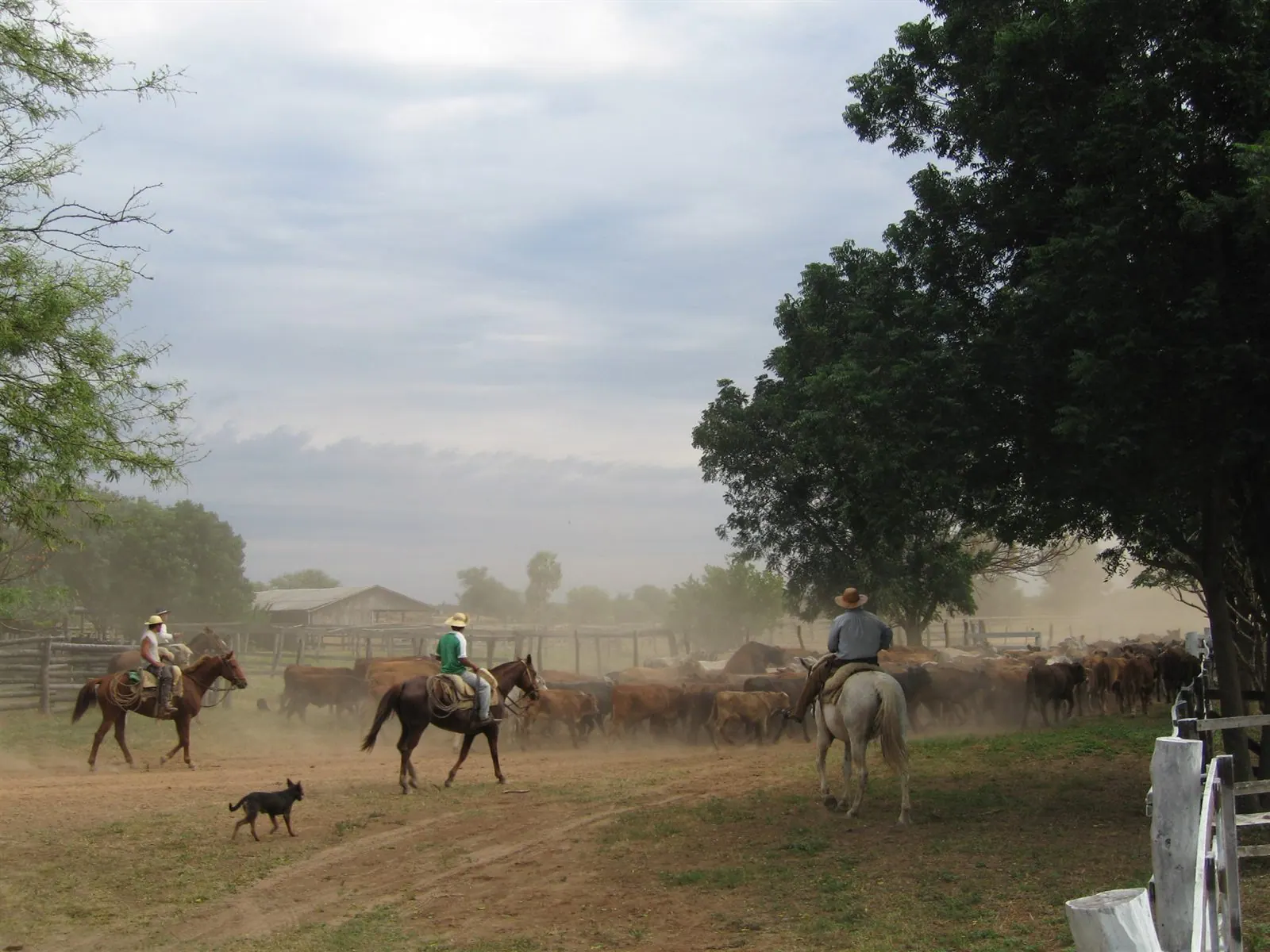
Cattle ranch management
Full-service management: planning, herd, pastures, infrastructure, staff and the numbers. You remain the owner and receive the ranch in production, with monthly financial reporting and access to the information whenever you want.
Six fronts managed together, because separately they do not work: a plan without staff is not executed, and a herd without infrastructure does not perform. All under one contract and one person accountable.
Defining the establishment's direction —breeding, rearing, fattening or full cycle—, real carrying capacity per paddock in cow equivalents/ha, work calendar and annual budget of income and expenses. The plan is approved with the owner before it is executed and is reviewed each quarter against what was actually spent.
Deliverable: written production plan, annual budget and work calendar.
Breeding season and service, pregnancy check and diagnosis, calving, branding and weaning, recategorization, selection, culls and CUT cows. Animal health plan following SENACSA's official calendar, with records of vaccinations, deworming and treatments. Individual identification and continuous updating of the inventory record.
Deliverable: cattle inventory by category, reconciled with the movements of the period.
Stocking adjustment per paddock, rotation with measured rest, weed and invasive control, staged renovation and seeding, forage reserves and mineral and protein supplementation according to the season. Monitoring the condition of the resource, not just the animal.
Deliverable: paddock map with assigned stocking and rest calendar.
Perimeter and subdivision fencing, corrals, chute, cattle race and scale, watering points, reservoirs, pumping and drinkers, internal roads, sheds and staff housing. Assessment of condition, a works plan prioritized by productive impact, and control of execution and spending.
Deliverable: infrastructure inventory with condition and a costed works plan.
Selection and hiring of field staff: ranch manager, foreman and hands. Proper employment records, social security contributions up to date, workplace safety and training in low-stress cattle handling. Effective supervision: staff report to a present management, not to instructions over the phone.
Deliverable: staff roster, documented labor compliance and performance evaluation.
Purchasing and inputs with price comparison, stock control, the establishment's cash, tax documentation in order, movement permits and procedures with SENACSA, and marketing of the cattle by evaluating sales alternatives. Everything closes in a monthly report.
Deliverable: monthly report with the economic result, productive indicators and supporting documentation.
All three options exist and all three can work. The difference isn't in who cares more about the land, but in what you get in writing and who answers when something doesn't add up.
| What to look at | Management firm | Trusted foreman | Doing it yourself |
|---|---|---|---|
| Accountability | Written monthly report, with receipts and indicators | Verbal, when the owner asks | Whatever you manage to keep yourself |
| Technical presence | Person in charge with technical training and periodic rounds | Good practical management, without systematic training | Depends on your own availability |
| Plan and budget | Production plan and annual budget, reviewed each quarter | Rarely exists in writing | Up to you to define, with no outside backing |
| Cross-checking | Reconciled count cross-checked against transport permits and SENACSA | Depends on personal trust | You are judge and party |
| Accountability for results | Contract with obligations, spending limits and penalties | Employment relationship, no accountability for the result | All the responsibility is yours |
| Your time | Freed up: you decide, you don't execute | Requires your frequent supervision | Close to full-time dedication |
| Continuity | A team and documented processes: doesn't depend on one person | If the foreman leaves, the ranch is left without leadership | Stops if you're not available |
This doesn't rule out the foreman: under our arrangement, the foreman stays on the ranch, but answers to a management firm with a plan, a budget and controls, not only to personal trust.

Managing is not visiting the ranch: it is answering for it every month.
From the diagnosis to the year-end close, in the order it actually happens. It's not a generic promise: it's the calendar we follow on every establishment we take on.
A complete survey of cattle, pastures, infrastructure, staff and records before signing anything. The report stands as a snapshot of what is received.
The establishment's direction, the carrying capacity per paddock and the year's budget are defined, and approved with the owner before being executed.
Individual identification, movement spreadsheet and the first reconciled cattle count by category. The database from which everything else is controlled.
A defined breeding window, with bull checks and monitoring of the cows' body condition before servicing, according to the establishment's calendar.
Pregnancy diagnosis, calf branding and the animal health plan following SENACSA's official calendar. The jobs where the year is won or lost.
Economic result for the year, valued inventory and a proposed plan and budget for the next exercise, built on what was learned.
The difference between a management firm and an expensive foreman is accountability. These are the deliverables committed by contract, with their frequency.
Every month
Cattle movements, inventory by category, expenses by line item, income, works completed and staff updates. With the supporting documents available for your accountant.
Every quarter
Indicators for the period: pregnancy and weaning rates over bred females, pregnancy-to-weaning loss, average daily gain in g/day per lot, stocking rate in cow equivalents/ha, mortality and kilos of beef produced per hectare, compared against the plan.
Every year
Economic result for the year, margin per hectare, valued inventory and a proposed plan and budget for the coming year.
Whenever you want
Coordinated visits to the establishment and access to records without asking permission or waiting for the report. It is your ranch.
At the start
A documented snapshot of the establishment upon taking over: cattle, pastures, infrastructure and staff. It serves to measure later what improved and what did not.
If something goes wrong
Abnormal mortality, a disease outbreak, fire, theft or any relevant event is reported the same day, not in the end-of-month report.
It is the question every owner asks who lives in Asunción and has the ranch four hundred kilometers away, and the one almost no one answers in writing. We answer it here, because trust without method lasts only until the first count that does not add up.
Inventory by category closed every month —breeding females, heifers, calves, steers, bulls— and reconciled with the formula that admits no argument: opening stock plus births and purchases, minus deaths, sales and transfers, equals closing stock. If it does not add up, it is investigated and reported in the same period. Full physical count every time the herd passes through the chute.
You set the amount we can spend without consulting you. Below it, it is executed and reported with a receipt; above it, prior written authorization is requested. And most important of all: the money from cattle sales goes into an account of yours or of the establishment's company, never into an account of ours.
Relevant inputs are quoted with more than one supplier and the comparison is attached to the report. It is not distrust: it is the only way to prove that the price paid was the best available that month.
Paddocks, watering points, corrals, infrastructure and cattle, with a date. A report can be written from a desk; a dated photo of the reservoir cannot.
Cattle movements are cross-checked against the movement permits and SENACSA records. It is an external control that does not depend on our word or our spreadsheet.
When we take over we document what we receive: cattle, pastures, infrastructure and staff. When we finish, the same report is made. That way it is on record what came in and what is handed back, and it does not depend on anyone's memory or on the mood of the farewell.
You can send your accountant, your veterinarian or an auditor to review records, cattle and receipts, without notice and without explanation. There is nothing to prepare before they arrive.
All of this is in the contract, not on this page. A promise on a website binds no one; a clause does.
The concrete management behind the plan, whether we manage your ranch or the cattle belong to a project of our own.
Breeding
A defined breeding window to concentrate calving in the best pasture season, with checking of bulls and monitoring of the cows' body condition before servicing.
Breeding
Pregnancy diagnosis to separate empty cows, organize calving and decide culls on productive criteria rather than by habit.
Rearing
Gradual separation with supplementation of the calf to cut the post-weaning slump and restore the mother's condition in time for the next service.
Fattening
Short occupation and long rest. The pasture enters grazing with leaf and leaves with reserve to regrow, which is what sustains the following year's stocking.
Fattening
Minerals year-round and protein or energy supplement when the forage drops in quality. Supplementation is used to sustain the curve, not to cover up stocking mistakes.
Exit
Monitoring up to the weight and finish the buyer requires, choosing the time of sale according to the market and not according to cash urgency.
Numbers, not impressions. These are the indicators that go into the quarterly report and are compared against the approved plan, ranch by ranch.
Reproduction
Females diagnosed pregnant over the total number of females exposed to breeding. The first number that says whether the breeding season worked.
Reproduction
Calves actually weaned over bred females. Measures the full reproductive efficiency, from breeding to weaning.
Rearing and fattening
Kilos each animal gains per day, measured by lot. The thermometer of whether the pasture and the supplementation are paying off.
Pastures
Cow-equivalent per hectare that each paddock can support without deteriorating the forage resource. Getting it wrong costs kilos or costs pasture.
Result
The indicator that sums up all the others: how much beef came off each hectare of the establishment in the year.
Animal health
Percentage of animals lost over the total, by category. A number that should not come as a surprise in the report: if it rises, it is reported the same day.

Staff report to a present management, not to instructions over the phone.
For the owner who runs their own ranch and needs an outside view on a specific problem, without handing over management. You stay in charge; we bring the technical judgment and a report of what needs fixing.
Diagnosis
Assessment of cattle, pastures, infrastructure, staff and records, with a report of findings prioritized by impact on the result. It is the logical first step before deciding on any change.
Animal health
Audit of the calendar, of vaccine handling and of the protocols for incoming cattle, with corrections ordered by risk.
Pastures
Calculation of real carrying capacity in cow equivalents/ha, paddock layout and strip design, rest calendar and a staged renovation plan adjusted to the forage species and the season.
Administration
Implementation of individual identification, movement spreadsheet, weighings and costs, so the ranch can prove what it produces and how much it costs.
Sometimes the party who needs to know what is on a ranch is not the one running it: a bank about to lend against the herd, a buyer weighing a ranch, an investor who put capital into someone else's cycle. For them we act as an independent auditor — we count, cross-check the paperwork and sign what we find — with no ties to whoever manages the operation.
Headcount
Headcount by category through the chute, reconciled against the records, transport permits and SENACSA data. Declared stock against actual stock, with the difference explained.
Collateral
Certification of the inventory backing a chattel-mortgage guarantee or a credit line: how many head there are, of what category and in what condition, with individual identification and dated evidence. What the lender needs to lend with confidence.
Purchase
A survey before acquiring a ranch: herd, pastures, infrastructure, paperwork and hidden liabilities. A report that says what is really being bought, before the deed is signed.
Investor
For whoever invested in a cattle project run by someone else: independent verification that the animals exist, are where they were said to be and perform as reported. The same traceability, working for the one who put up the capital.
The external audit is contracted on its own, with no need to manage the ranch, and the report belongs to whoever commissions it.
Presence
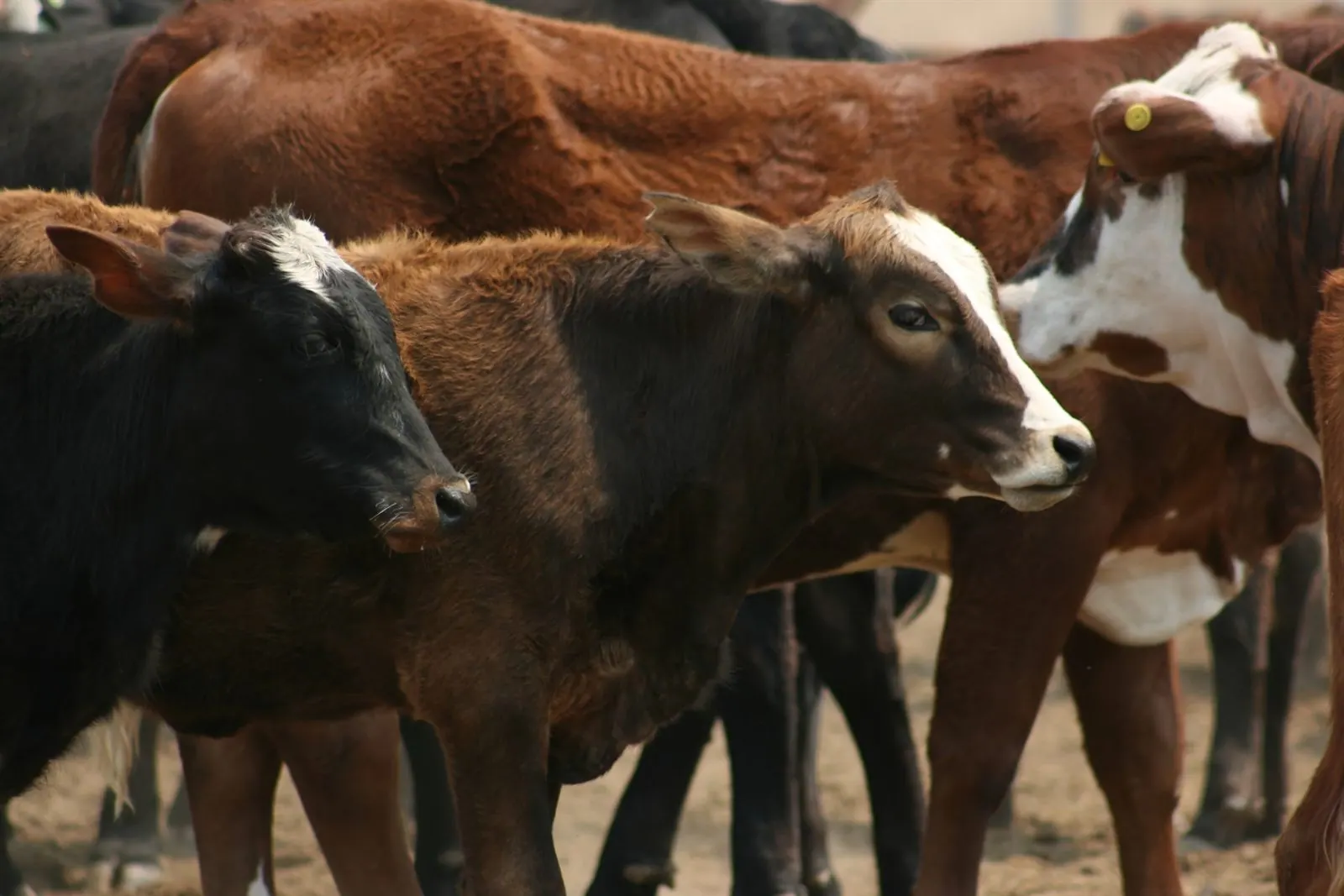
A written plan does not move a single animal. That is why management rests on real presence: permanent staff at the establishment, periodic technical rounds by the person in charge and mandatory presence at the work that defines the year.
Breeding season, pregnancy check, branding, weaning, vaccinations and shipments are the moments where the year is won or lost. On those days someone of ours is at the chute, not on the phone.
The minimum needed to diagnose and put together the plan. If you don't have some of this on hand, it's not a barrier: it's part of the first month's work of getting things in order.
Title deed or a current lease agreement for the establishment.
Up-to-date inventory record, or authorization to survey it if none exists.
Movement permits and SENACSA records of the most recent cattle movements.
Who authorizes spending above the limit and which account cattle sales go into.
Coordinate a date for the initial survey: without a visit there is no diagnosis.
Current roster, employment status and planned continuity of those already working on the ranch.
We say it before the meeting so you do not waste time: there are three possible schemes and only one is agreed, in writing, before starting.
Scheme 1
An amount agreed according to area, number of cattle and complexity of the establishment. Predictable for the owner and suitable when the ranch is already running steadily.
Scheme 2
A share of the kilos produced or of the year's result. It aligns our income with yours: if the ranch does not produce, we do not get paid the same.
Scheme 3
A low fixed fee covering operations plus a variable for performance against the agreed indicators. It is the one we usually recommend for ranches in recovery.
The establishment's expenses —staff, inputs, animal health, fuel, works— are the owner's and are reported with receipts. The management fee is separate and is never deducted from the cash without authorization.
Besides everything detailed under management control, these four conditions are written into the management contract, not left to anyone's good will.
A notice period defined by contract and a final handover report, so a change of management doesn't leave the ranch adrift.
Social security contributions, workplace safety and current insurance for the staff we manage: the labor risk does not fall on the owner.
Management answers to a team with documented processes, not to a single person. An absence does not stop the ranch.
When the contract ends, everything is handed over: cattle, infrastructure, records and access, complete and unconditional.
First step
We go, we survey and we hand you the report with what we found. Only after that do we talk about managing: no diagnosis, no plan, and no plan, no contract.
With the diagnosis in hand you'll know, before signing anything: what condition your ranch is in, which fronts need attention first and which fee scheme suits your case.